Showing posts with label Equipment. Show all posts

Tuesday, October 25, 2016

Four Paragolfers Make Golfing in the Boston Area More Accessible

Paragolfers in use at Leo J.Martin Memorial Golf Course.
Today was a brisk fall day at the end of the golfing season but that didn't stop 10 golfers with disabilities from playing at Leo J. Martin Memorial Golf Course in Weston, Massachusetts.

Golf professional and adaptive instructor from Spaulding Adaptive Sports Center Rick Johnson was in his element coaching his Back Into The Swing program on its final outing of the season.

I found the golfers bundled up against the breeze playing in three distinct groups. Three of the golfers were using Paragolfers to play - an all terrain wheelchair that assists the user into a standing position to swing. The other golfers were making use of conventional golf carts to traverse the long course and had a variety of disabilities.

Jerry Donovan and Jeff Whelpley stand up to play.
"I've been able to play golf twice a week thanks to these machines! It's awesome! It's been a Godsend!!" exclaimed Jeff Whelpley. "This is the best thing that has happened to me since my accident!"

Jeff is a tall man who volunteered at Loon Mountain's adaptive downhill ski program for four years - "one of the best things I'd done in my life." The day of his accident he informed me, he was supposed to go golfing, but switched to motocross racing instead and ended up "wrapped around a tree". Like many adaptive golfers, he was a serious golfer prior to his accident.

The Department of Conservation and Recreation purchased four Paragolfers this year for the two golf courses managed by the state agency. This innovative vehicle has transformed the lives of those who have discovered it. Two are kept at Leo J. Martin and the other two reside at Ponkapoag Golf Course in Canton. Now golfers with spinal cord injuries or who otherwise cannot walk or stand, can play golf in the greater Boston area.

Rick Johnson applauds excellent progress.
"Two Paragolfers at each course is a gift from above," said Rick Johnson. "I'm sure this hasn't happened anywhere else. Now these guys are playing twice a week and organizing a tournament on November 8th."

One of the other guys, Steve Kuketz, achieved a hole-in-one this summer on this course using the Paragolfer. He told me today his next hole-in-one is not long off.

Steve and Jeff are the main organizers for the 2016 New England Regional Championship, an event hosted by the newly formed Massachusetts Para-Golfers Association (MPGA), The event starts at 11 am on Tuesday, November 8 and costs $25. Over 20 people are already signed up. For further information, contact 508-889-7581 or 781-217-8170. "Anyone with a disability is welcome and can play", said Steve.

For more information on the Back Into The Swing Program, contact Spaulding Adaptive Sports Center at 877-976-7272. They offer indoor instruction over the winter while dreaming of spring.

Monday, February 29, 2016

Trionic Veloped - Off-Road Walker for Hiking

The Trionic Veloped Off-Road Mountain Walker is a wonderful supportive aid for people with limited mobility who want to explore trails and expand their hiking options. We've been gradually integrating this attractive device into our adaptive outings in Massachusetts State Parks. This all-terrain walker has turned out to be a great match for several of our Universal Access Program participants with disabilities.

Previous to the introduction of the Veloped Mountain Walker - also called by the simpler name Trek - I noticed some people were bringing wheelchairs or rollators to hiking programs to provide balance and portable seating during the trail experience. This standard medical equipment is not designed for off-road conditions and often doesn't perform well on irregular pavement, let alone on a trail. Tiny wheels on the front casters of standard wheelchairs are notorious for getting stuck or requiring additional effort or support to push through gravel, brickwork and other uneven surfaces.

Friday, November 6, 2015

Go Grit Freedom Chair

This year I've test driven the Freedom Chair, a recently developed off-road manual wheelchair, twice. This stunningly solid, affordable and conveniently designed wheelchair was created by MIT students as a school project and produced in quantity for use in underdeveloped countries. This innovative entrepreneurial student group has since launched a company, called GRIT, to produce the Freedom Chair for sale in the U.S. In their first year they've sold seventy chairs so far.

I first tested the Freedom Chair in early spring, with snow still on the ground, as the Go Grit team was fundraising to produce their first round of chairs. A couple of us in the Universal Access Program were able to test ride it outside our office and discovered that it could travel over grassy terrain and snow patches with ease. We could even work it up over curbs and handle uneven terrain pretty well. Our landscape was limited though and we didn't have a true user, someone who actually uses a manual wheelchair, to give us what I would consider official feedback.

Wednesday, October 21, 2015

Testing New Adaptive Paddling Equipment


This month, DCR's Universal Access Program staff have been testing out some new adaptive equipment for next year. It's been a treat to get out into the fall landscape!

We tested a canoe paddle modification we made based on a recommendation from AccesSport America. Bending the paddle in two spots keeps hands low for those who have trouble raising their arms. We found this modification worked in both bow and stern. Adding hand supports from Creating Ability made it possible to steer. Our only concern is the paddle could be lighter!

We also tested new kayaking equipment from Creating Ability including the kayak chariot, transfer bench and paddle pivot.

The kayak chariot makes pushing and pulling boats in and of the water with passengers much easier and takes a lot of strain off staff. We found a little bit of back bend is still required, but very little effort to move loaded kayaks. Empty kayaks can be placed on the big-wheeled chariot, then quickly hooked into place with straps. A small stepstool is required at the bow to level the kayak for loading.

Sunday, March 29, 2015

Gliding Stars Skate Walkers

After fifteen years of making skate walkers to assist people with balance in our adaptive ice skating programs, I have been thrilled to discover a professionally manufactured skate walker.

While making skate walkers out of PVC pipe is relatively inexpensive, our walkers have had a tendency to break or come apart in transit to programs and sometimes even in use on the ice.  Since we are using the PVC pipe in a way it was not intended, there is a vulnerability to cracking of joints in particular on cold ice. They've required extra attention to be sure they are in good working order and used properly so they don't slip out unexpectedly from under the user.  Having to discard broken skate walkers and rebuild for each season is a hassle I'd love to eliminate as a recreation manager.


The metal skate walkers offered by Gliding Stars offer a four leg stable wide base design that is very difficult to knock out of position while in use, even when applying full body weight. Weight limit? 350 pounds! The walkers are hinged with a tube-within-a-tube method that allows for folding in transport. Foam handles offer a cushioned support for  hands and avoid contact with cold metal. The walkers come in three sizes to cover a range of heights. Though I would prefer one walker model that allowed for height adjustability, I am sure that the three sizes offer a better fit and stability for individuals within the size range of the design.

Gliding Stars is a fantastic adaptive skating program based in New York oriented toward teaching people with disabilities who are ambulatory the fundamentals of ice skating. Founded in 1994, Gliding Stars has developed their own line of assistive devices as part of their mission to provide individuals with disabilities the opportunity to increase their potential and have fun learning to ice skate. They provide instructional expertise and guidance to communities interested in starting chapters. Gliding Stars has chapters around the country in Ohio, Pennsylvania, Maryland and Florida and is looking for more venues.

Each chapter offers an end of season public ice show allowing skaters to dress in costume and demonstrate their skills to music.

Check out recent performances on YouTube, where you can see various skate walker designs in action, by searching Gliding Stars 2015.

Anybody want to start up a Gliding Stars chapter in Massachusetts?

Sunday, June 29, 2014

Massachusetts Welcomes Floating Beach Wheelchairs


Over the past three summers, floating beach wheelchairs have been multiplying at public beaches on Cape Cod. Soon they will become prevalent along the coast of Massachusetts from Cape Cod to Salisbury Beach on the New Hampshire border. Now anyone with a physical disability who would like access from a car across the sand and into the water can accomplish this task with ease, thanks to the amazing endeavor of two mothers of children with disabilities who comprise an organization called SMILE Mass.
SMILE (Small Miracles in Life Exist!) Mass is the creation of Lottie Diomede and Susan Brown. Together they are raising money through special events and donations to purchase Mobi-Chairs as part of their mission to improve the quality of life - and especially vacations - for people with disabilities and their caregivers. 64 floating beach wheelchairs have now been donated to beaches in 14 towns across Cape Cod. To see the full list of the beaches with the beach wheelchairs, click here. These wheelchairs are always free to use and are suitable for anyone with mobility issues, both children and adults alike. Susan and Lottie have big plans to continue placing Mobi-Chairs along the coast of New England, as well as other similarly inspirational projects in the works.


Saturday, June 14, 2014

Liberated With SideStix

SideStix All Terrain Crutches change people's lives! If you walk but have mobility issues and you are missing your former all terrain habits, consider SideStix!

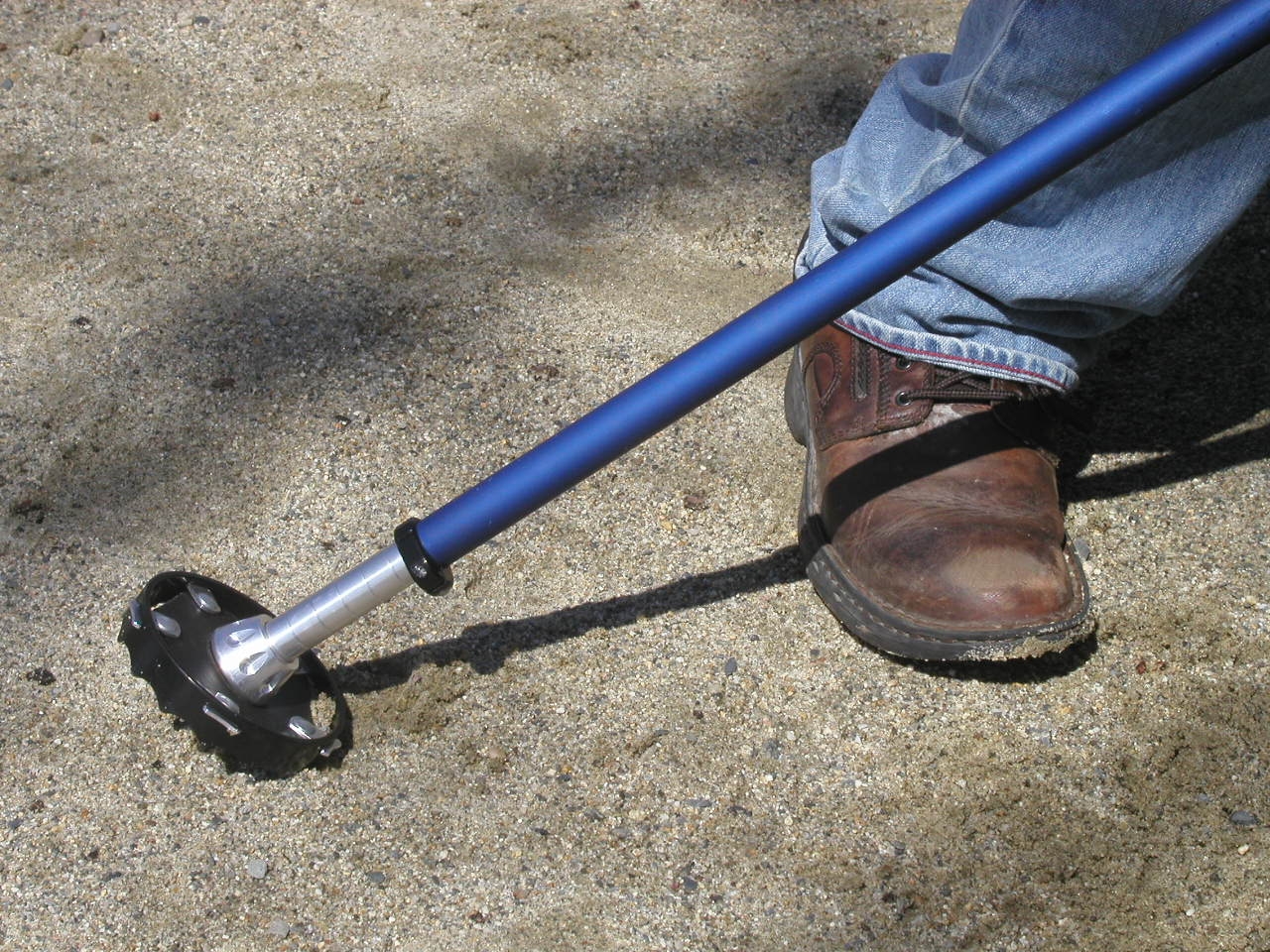
These lightweight, well-engineered Canadian crutches offer shock absorption, an articulating/rotating ankle, padded cuffs, ergonomic hand grips and interchangeable tips for sand, mud, snow and ice. They are designed to take the strain off your shoulders and other joints as well as get you out where you want to be!

My neighbor Libby suffers from premature degeneration of her hip joints. She called me up to see what I might know of that could help her walk in the woods again. We discussed various options including hiking poles and SideStix.

After trying the SideStix, she was ecstatic. "I walked the dogs today with the SideStix. I didn't cry on my way home. I could walk and not be in pain at the end of the day. This is going to change my life!"


Saturday, June 30, 2012

Paddling Adaptations

We are gearing up for our summer paddling programs to start next week! A new purchase for canoeing this year is the Universal Paddling Seat from Creating Ability. We started using this seat for kayaking last year. Adjustable side bars are fantastic options for those who need torso support and can be removed individually for those who don't. The overall comfort and stability of this well designed seat inspired me to get some for canoeing as well.

The canoe version mounts on a conventional wooden canoe seat - there is no design yet for plastic molded canoe seats, though that may be in the works. The terrific advantage of the Universal Paddling Seat is that it enables someone who might otherwise be relegated to the "duff" position in the middle of the boat to sit on a seat and paddle in the proper position. It also offers reclined positions and shoulder support if the person in the bow is not paddling. The beauty of the seat design is that it can be adjusted easily to offer as much or as little support as needed by each individual paddler. We are looking forward to trying this out with program participants in July!

Often the most needed modification is assistance holding and using the paddle. We've been using Creating Ability's hand adaptations since last year as well. No more home-made hand supports using inner tubes and zip ties! The basic across-the-back-of-the-hand-grip works well for those who have some  hand function but need support to keep the hands on the paddle.  Hands slide in and are held in place comfortably and can be slid out with ease.
For those unable to grasp the paddle but have good arm function, Kevin Carr of Creating Ability offers a unique hand cuff that slides into an attachment on the paddle. Hands are held in place on the paddle even if fingers can't grip the bar and the arms can be used to propel. In the event of a capsize, it is simple to slide the cuff and therefore hands out of the paddle attachment. New this year, we are exploring Kevin's latest adaptation for one-armed paddling, called ProPel, using a similar cuff system mounted in the middle of the paddle. Kevin also suggests the ProPel can be used with canoe paddles. We'll try it out.

Recently, I happened upon an innovative one-armed paddle design for canoeing designed a few years back in Wisconsin by a professor of outdoor education at Northland College. View it on YouTube here. If you are interested in this item, contact cdillenschneider@northland.edu.

Saturday, May 26, 2012

The Eureka! Freedom Tent

Summer is rapidly upon us and those planning camping trips should know of the Eureka! Freedom tent! Several years ago at a National Recreaion and Parks Association conference in St. Louis, I met Diane Goodwin, the designer of the first camping tent designed with wheelchair users in mind. She was tweaking her final design of the new tent, which years later is still the main option on the market for people with mobility impairments.
Diane put some remarkable thought and innovative design into this product, which received the da Vinci award in 2006 for exceptional design that transcends mandated access requirements. The frame of the two-room rectangular dome tent is self-standing and can be set up by someone in a wheelchair from one side of the tent. The front door has an easy open flap system requiring little effort. The main entrance opens into a front vestibule that allows someone in a wheelchair to fully enter the tent before transferring into an adjacent sleeping area. This extra front room can also serve as a dressing room, dog sleeping area, or additional storage. The sleeping space has rear entry window-doors. Large door and window pulls on the interior make life much easier for campers with arthritis or limited hand mobility.
Blue Sky Designs, Diane's Minneapolis-based design business, teamed up with Eureka!, a well-known tent company, to make this excellent tent available to the public. Technically a two person tent, you can likely sleep at least one child in the front vestibule with a parked wheelchair. The Eureka! Freedom tent retails for $454, but can be found at lower prices online. It's well worth the investment if you are a serious camping couple or small family. The tent is such a great example of universal design that it comes highly recommended for anyone. New Englanders can check it out in person next month at the Adaptive Recreation Fair in Boston on June 9 at the Spaulding Adaptive Sports Center and CapeAble Adventures booth!

Monday, December 12, 2011

Ice Sleds Available for Public Skating & Winter Gear You Can Use at Weston Ski Track!


The skating season is upon us and many state rinks in Massachusetts have accessible ice skating sleds for people with disabilities to use on their own during public skating! Call in advance to ensure availability and find out anything else you need to know before you go!

Here is a list of places to go:

Auburn - Horgan Rink: 508-832-7201 (2 sleds)
Cambridge - Simoni Rink: 617-354-9523 (3 kids sleds)
Boston: Hyde Park - Bajko Rink: 617-364-9188 (2 kids sleds)
Boston: North End - Steriti Rink: 617-523-9327 ( 2 sleds)
Boston: West Roxbury - Roche Rink: 617-323-9512 (4 sleds)
Brockton - Asiaf Rink: 508-583-6804 (4 sleds)
Franklin - Pirelli/Vets Rink: 508-541-7024 (2 sleds)
Greenfield - Collins/Moylan Rink: 413-772-6891 (2 sleds)
Holyoke - Fitzpatrick Rink: 413-532-2929 (6 sleds)
Jamaica Plain - Kelly Rink {OUTDOORS!}: 617-727-7000 (1 sled)
Medford - Flynn Rink: 781-395-8492 (2 sleds)
Newburyport - Graf Rink: 978-462-8112 (1 sled)
North Adams - Vietnam Vets Rink: 413-664-8185 (3 sleds)
Plymouth - Armstrong Rink: 508-746-8825 (2 sleds)
Revere - Cronin Rink: 781-284-9491 (4 sleds)
Springfield - Smead Rink: 413-781-2599 (4 sleds)
Taunton - Alexio Rink: 508-824-4987 (2 sleds)

Each sled has a set of hockey sticks with which you can propel yourself and there is at least one stroller bar at each rink to allow for being pushed too. Some sleds have more support - a higher back and chest strap for those who need additional stabilization. If a rink has 2 sleds, one will feature extra support and a stroller bar handle. Kids usually fit fine into adult sleds (but alas the reverse it not true!). If you prefer to use another DCR rink that isn't listed, call 413-545-5758 to see if we can accommodate your need.

At the Weston Ski Track outside Boston, there are 2 cross country sitskis and 2 kicksleds available for use. Even if there is no snow, as long as its cold enough, snow is made for 2km of groomed trails! When there is snow, the trails expand! For those who have utilized the adaptive ski programs on site but don't have their own sitskis, you can go on your own any day of the week! If you are already experienced at sitskiing, contact the Ski Track at 781-891-6575 to find out how you can access the snow. The Ski Track is open until 9pm Monday - Thursday! Try night skiing!
Scandinavian kicksleds are a nice accommodation for anyone who can't walk far and would like to tour the trails with an assistant to push them. They are also great movable seating for seniors who would like to watch ski races at the Weston Ski Track!

For a list of adaptive winter program opportunities in Massachusetts, click on the Winter Calendar tab under the header above.

Saturday, September 24, 2011

Change Peoples Lives - Successful Expo in Boston

 
I-Zip scooter user  minimizes use of
wheelchair and even gets out on some trails!

The Rodman Ride has been postponed this weekend due to wet weather but yesterday's rain didn't prevent people with disabilities of all kinds from attending the Change People's Lives Conference and Expo at the Hynes Convention Center in Boston. Kudos to the Institute for Human Centered Design for masterfully convening an event hosted by the Commonwealth of Massachusetts that showcased assistive technology and attracted an enthusiastic crowd!

It has been a few years since I attended an assistive technology expo. It was a treat to talk shop with other professionals and meet people already active in sports and others seeking recreation opportunities. There were panels on four conference themes of Home, Work, Education and Fitness/Sport/Recreation, an exhibit hall of related products and services, a juried design competition and a plenary session that featured a host of inspiring speakers including Governor Deval Patrick, Cheri Blauwet (MD at Spaulding Rehab Hospital and Paralympian), Gianfranco Zacchai (designer), and Gururaj Deshpande (entrepreneur and philanthropist). Assistive technology has high promise as an emerging new market with ideals transcending the "special products for special needs" orientation that has brought us this far. My mind and eyes were opened wider quite a few times during the day - by products, ideas, and people's stories.
 
Talking with a telepresent person via a robotic device.

A few highlights: learning about Fred Fay - an amazing disability rights activist who interfaced with the world from his bed, a robotic telepresence device called VGo that allows you to experience locations you might not physically be able to get to, a woman with an incomplete spinal cord injury that uses an I-Zip scooter as her wheelchair, and a bike called Glide Cycle that allows users to have an unweighted exercise experience. I even found something for myself there - Wrist Assured Gloves - innovative fitness gloves that minimize wrist stress.

It was fantastic to see that fitness for people with disabilities was a major area of dialogue in the conference. Paralympian athletes like Anjali Forber-Pratt are paving the way, but there is still great need for more welcoming and universally designed gyms that work for people with a wide array of variable function. We joined that conversation in panel discussions and handed out loads of information about park accessibility. I have high hopes that more people with disabilities will be improving their health indoors and out!

Tuesday, August 16, 2011

Great Gear You Can Use! - in State Parks!


Sun worship at Salisbury Beach State Reservation.
BEACH WHEELCHAIRS
There is still plenty of time to enjoy the beach this season! Most coastal New England states offer beach wheelchairs at state parks. Styles may vary but usually require someone to push. Chairs are designed to get you TO the water, assistance may be necessary to get INTO the water.

Massachusetts State Parks: Over 40 parks offer beach wheelchairs on the ocean and inland! Beach wheelchairs are made of PVC pipe and feature a movable arm for transfers and large balloon tires for travel across sand to the water. No fee to use – bring someone to push the chair. Reservations are sometimes required and always recommended. Contact the park directly. Click here for a list of parks with beach wheelchairs.

Connecticut State Parks: Five parks - Hammonasset Beach, Rocky Neck, Sherwood Island, Silver Sands and Squantz Pond - have beach wheelchairs available for visitors. The chairs are free of charge and are on a first come, first serve basis.

Rhode Island State Parks:  Beach wheelchairs are available free of charge, also on a first come, first serve basis, at the following R.I. state beach locations; Scarborough North, Scarborough South, and Roger Wheeler.

Maine State Parks: At least 2 state parks in the southern region advertise beach wheelchairs. Call the regional headquarters in Augusta at 207-624-6080 for more information about beach wheelchairs at Crescent Beach State Park (near Portland) and Popham Beach State Park (near Bath).


Perforrmance style handcycle available to ride in R.I.
HANDCYCLES
There are two New England locations worth knowing where you can use a state-provided handcycle to ride beautiful coastal areas!

Cape Cod Rail Trail - Rent a handcycle and ride through several Cape Cod towns on forested paths! You can also explore adjacent Nickerson State Park bike paths. Two adult touring models (Quickie Mach 3) available at Cape Cod Rail Trail Bike Shop.

East Bay Bike Path -  On a first come, first serve basis, two hand cycles are available at Colt State Park for use through out the park or for the East Bay Bike path in Bristol, Rhode Island.


Ice Sled in use at Buffone Arena in Worcester.
ICE SLEDS
Surprised? Some ice rinks are open year round and offer wonderful respite from the heat or an alternative rainy day activity. Many state rinks in Massachusetts offer ice sleds for seated skating, with short hockey sticks with picks for self -propulsion and an attachable stroller bar for those who need to be pushed. Check out public skating times on-line for each rink. No fee to use sleds, rink admission fee may apply. Recommended  year round rinks:

Jim Roche Community Ice Arena in West Roxbury - currently 7 sleds with 7 handles through October 6th.

Smead Skating Arena in Springfield - currently 4 sleds with 2 handles year round.

Buffone Arena in Worcester - currently 4 sleds with 2 handles year round.

Armstrong Skating Arena in Plymouth - currently 2 sleds with 1 handle year round.

Monday, August 8, 2011

Creating Ability Offers High Quality Kayak Adaptations


Creating Ability kayak set up with pontoons and low back
seat in use at D.A.R. State Forest in Goshen.
It is challenging to post with peak time in summer recreation activities taking place now, but here is a quick look at kayaking. In particular, we are putting some new kayaks from Creating Ability into good use at our kayak programs in Concord, Worcester and the Berkshires.

I was thrilled to discover Creating Ability last summer and purchase some kayaks with pontoons and adaptive seating this year. The design is the best I've seen for pontoons on kayaks, which provide greater stability for more vulnerable paddlers. I especially like the independence these boats offer to paddlers who might otherwise have to be in a tandem for the stability reasons or struggle to paddle independently with compromised stability and comfort. The boats come with color coordinated pontoons in a complete package - very nice!

Paddler struggling with balance and proper seating could
benefit from pontoons and more formal adaptive seating.
The adaptive seat offers good trunk support for those who need it. The high back can be easily removed. Both low back and high back sides adjust in and out to accommodate narrower and wider bodies. The seats can be angled or straight depending on preference and comfort. The addition of a Jackson "sweet cheeks" cushion, which easily fits to your specific anatomy, adds a final level of comfort. I'm surprised people are willing to get out of these kayaks when their sessions are over!

Other recreation organizations in Massachusetts that have been acquiring kayaks from Creating Ability this year include All Out Adventures, Holyoke Rows, and Waypoint Adventure. These boats are making their way into a variety of kayak fleets! Thanks again to Ralphe Marche of New England Handicapped Sports Association for showing me this great equipment last summer!

If you are looking for better grip adaptation for kayak paddles, you may not need to look further than Creating Ability. For years we've been making do with home-made adaptations that help hold hands to paddles while still allowing them to slip out easily. Charlie Croteau makes a great hand adaptation for people who are quadriplegic but doesn't mass market it. Creating Ability provides three good solutions for common hand adaptions needed in paddling - a simple grip support to keep fingers on paddle, a more involved wrist and grip support for people who are quadriplegic, and a way for one armed or hemiplegic paddlers to succeed. This last adaptation is currently going through a design change so we are still waiting to try it out. Check it all out on their website: http://www.creatingability.com/

Thursday, April 14, 2011

SideStix in Action

We finally got to test SideStix today in an urban park in Worcester. Dwayne Boyd has provided us with the first real run on these adaptive all-terrain crutches and the feedback I've needed to assess them for our hiking program. Dwayne is a few months shy of forty and has cerebral palsy. It was his second time testing SideStix. Both times he marveled at the reduced impact on his joints that the shock absorbing design offers.

Last month we took a short walk outside the Buffone Rink before a skating program and tried SideStix on a rapidly melting snowfield still over a foot deep. He was amazed by his ability to float on top of the snow using the snowshoe attachments. Afterwards he said, "With these crutches I could go out in the yard and play in the snow with my kids! I know this product is intended for specialized use, but I would buy them to use everyday!" Since then, he's been working every angle to acquire a pair. Dwayne has written his own account after his first use of SideStix which you can link to here.


Dwayne uses an allen wrench to swap out tips on SideStix.
In today's test adventure we tackled the beach and a gravelly acorn-laden uphill trail, scrambled over a stone wall, ambled through the paved parking lot, and took a short stroll on footpaths to get onto a wooded knoll. Dwayne's mother Linda joined us for part of the time, and treated me to a potent dose of  mother's pride. "I remember the doctor sitting down with us when Dwayne was a kid," she said. "He gave us a list of all the things Dwayne would never be able to do. I'll never forget the day when Dwayne crossed the last one off the list - that one was 'having children'." I was dying to hear what else Dwayne had crossed off the list, but I had to run to keep up with him!


On the beach, Dwayne once again discovered he had better grip on the ground with SideStix. "This would be impossible on my regular crutches," he noted. With the spike and trail basket at the crutch tip, they performed well in both wet dense and loose dry sand. SideStix gave Dwayne more efficient use of his energy - he could travel farther than on his own crutches. He also traveled faster on level ground. The rotating articulating tip gave him more secure contact with pavement and all its irregularities. He found the spike surprisingly easy to adjust to using on the trail.

Dwayne had to give the crutches up briefly to get over the stone wall, took a tumble when he stepped on the trail basket at the crutch tip by accident, and decided not to tackle a steep grade with loose gravel when he met the edge of his comfort zone. Otherwise, Dwayne would have kept going until dark I think. Playing with his daughters at our skating program was on his agenda for the afternoon. Between "sidesticking" and ice sledding, Dwayne should sleep well tonight!

Saturday, March 12, 2011

New Ruling Allows Power-Driven Mobility Devices on Trails

Effective March 15, people with mobility-related disabilities will be able to legally use power-driven mobility devices other than wheelchairs to access trails on public lands. This Department of Justice Ruling has been under consideration for awhile, with much input from the disability community and others. It specifically applies to those entities covered under the ADA (Americans with Disabilities Act). In reading through some of the text of the ruling, I find it admirable to see how well considered the needs of people with disabilities are taken by the federal government, although the new law does not apply to federally managed public lands, such as National Parks. State, local, and private land managers are scrambling now to figure out how to integrate the new DOJ ruling into practice, since it will apply to trails not normally open to motorized vehicles. Areas that have been assessed according to DOJ standards may be exempt from the new ruling.

Five years ago at one of our Universal Access Program events in the Berkshires of Massachusetts, a woman on a Segway using the Ashuwilliticook Rail Trail rolled up to talk to us and demonstrate her new mobility device. It was exciting to see the Segway in use, particularly by someone with multiple sclerosis. The Segway is a good example of a power driven mobility device designed for broad public use, with great potential for some people with disabilities. Other examples include golf carts and ATVs.

Saturday, February 12, 2011

Dreaming of Summer? Time to Start Planning!

If you are winter weary or just want to fast forward towards summer, here are a few things to consider as you dream of warm weather, green trees and open water:


Yurt Camping 
Now is the time to make reservations for accessible yurts and cabins in Massachusetts State Parks! Several parks from Cape Cod to the Berkshires offer great accommodations (including electricity!)that make camping easier than ever before! Reservations open up 6 months in advance so we are already booking for mid-July! Click here for more info on yurt camping and here for more general info on camping in Massachusetts State Parks.


Beach Wheelchairs
Boardwalks and beach wheelchairs help make beaches more accessible. Our popular wheelchair buggies are available throughout Massachusetts State and Urban Parks on both inland and ocean beaches. Families and couples with a variety of disabilities have made regular use of these chairs over the years. They feature a movable arm for easy transfer from wheelchairs. Use is free - we recommend calling in advance to ensure a chair will be ready for your arrival. Click here for more info!


Accessible Sailing
If you are planning a trip to Boston this year, come sail on the Charles River with Community Boating. With adapted Mercury and Sonar sailboats, you can sail independently or in a supportive group with friends and family. Adaptive sailing takes place every day of the week from May 2 through October 2. With a brand new dock and a hoyer lift, plus a daily schedule, sailing this summer will be better than ever! Many participants who live in the Boston area sail regularly and have earned various sailing certifications. You can read about a participant's experience here!

Last, but not least, stay tuned for our summer program schedule of kayaking, cycling, hiking and other activities at numerous locations around Massachusetts - it won't be out for awhile, but you can get a newsletter via email or U.S. mail - just email me at marcy.marchello@state.ma.us and put "summer!" in the subject box.

Wednesday, January 26, 2011

Strategies For Making Modified Sitskis


Everyone is included in this family outing at D.A.R. State
Forest thanks to the use of a modified sitski.

Here's a look at what we've done to make sitskis more user friendly for those who require secure assistance for gentle winter outings.

With credit to Brenda Davies (pictured far right) for the initial momentum for this project, the DMR handled our first fabrication of two sitskis and did a professional job in their shop. We provided the sitskis - they created a stainless steel stroller bar handle and clamped it on. To prevent sideways tipping of occupants that is easily caused by an irregular posture and trail ruts, the DMR fabricators created an outrigger from of the tips of downhill skis mounted on blocks and attached to a bar, which is then clamped onto the sitski frame. A chest strap can also be used to keep a passenger's weight more centered in the seat - the handle bar frame provides a secure support.
Sitski by Colin Dye with stroller bar and outriggers by the
Massachusetts DMR fabrication shop.


Since the DMR could only do a one-time project for us, we resorted to a new design for our next set of modified sitskis, using flexible conduit pipe to bend an arched and wider handlebar shape onto the back of the sitski, attached with plumbing clamps. The handle in this case extends beyond the width of the sitski - a feature that is great for easier manueverability for the pusher, but complicated for transport - so the bigger the sitski, the better it is to keep it based on one site. The outriggers were a close replica of our DMR designed model. Thanks to Michelle Bitgood for creating and completing this fabrication and adding to our fleet!


The modified Ski For Light sitski.
We see a lot of use of this equipment, especially at larger programs that attract groups. Four of these modified sitskis aren't always enough! Last year we selected a Ski For Light sitski that had been donated to our program for our next modification. The knee support bar was sawed off and sanded down, allowing for a range of options for comfortable leg positioning using bolsters. Bryant Stewart, supervisor of Wendell State Forest, used square aluminum tubing to construct a frame for a round tube cross bar handle, which he bolted onto the sitski frame.

Despite its cafeteria style seating, the Ski For Light sitski is surprisingly comfortable. With wider skis set further apart, we decided not to use outriggers, which allows greater ease of poling movement for the sitskiers who use poles. If desired, rubber bike grips can be attached to handles for greater traction and warmth for those pushing. It is also helpful to position the skis more forward under the frame to allow for easier walking for the person behind the sitskier.

Sitski by Bob Hall with modifications by Michelle Bitgood.

All of these designs function well and demonstrate a range of possibilities. So often adaptive equipment needs further modification to better serve users and much homespun innovation goes on out there! If you have other solutions for supporting people with severe disabilities on the snow, please share! I am still surprised that there isn't a standard product on the market yet - or if there is, please let us know!

Monday, January 3, 2011

Nordic SitSkiing 101

I managed to squeak in one cross country skiing experience in last week's snow, a fabulous 3 miles through the woods on the shadowy side of a mountain that held diminishing conditions longest. Now I'm looking forward to visiting the Weston Ski Track for my first sitski outing of the season. In anticipation, here's a primer on sitskis and basic technique.

Sitski Equipment

Nordic sitskis consist of a metal frame mounted on cross country skis, with a plastic or sling seat, allowing the legs to extend forward in either a straight or bent position. Sitskis models used in our Universal Access Program are not currently being manufactured, so if you are looking to purchase a sitski, I recommend checking out Sierra Sitskis, which seem to be popular among serious users and can be ordered for custom fit. Sierra Sitskis are shown in these photos from last year's Vasalop Ski Race at the Weston Ski Track.

On our older sitskis, I maintain a base coat of wax on the skis for protection and recommend the application of glide wax from tips to tails just prior to use for maximum glide. Glide wax can be applied periodically throughout a ski session as needed - the sitskier has to intentionally or accidentally tip over so the application can be made by another person, although I'm sure some sitskier somewhere has probably mastered self application by now.

Ski poles need to be shorter than for standskiers. Once someone is in the sitski we generally offer poles up  to head height in length. The longer the pole, the more power on uphills, but it may take awhile to work up to that length or longer. Poles can be cut to size using a hacksaw and the handles removed by soaking in hot water and re-glued on to the shortened pole.

We also supply a fanny pack with sitskiers, usually worn by an able-bodied ski partner, who may ski alongside or behind the sitskier, providing as much or as little assistance as needed. The fanny pack contains a tether with carabiners, glide wax, an emergency space blanket (very helpful when it is snowing as sitskis tend to capture more falling snow in their laps than standskiers), trail maps, and any other additional supplies that might be needed.

Sitskiers with strong upper bodies in good physical condition will want to ski as independently as possible. On a groomed course this may be 100% of the time. On more rugged terrain an assisting standskier is essential for support, providing uphill boosts from behind or pulling support on long upgrades using a tether. Supplemental braking is helpful security on long downhills - the standskier holds a tether clipped to the back of the sitski. Working in tandem allows many sitskiers to travel further and work out more efficiently than going solo, building strength and endurance for improved independent skiing.

Basic Sitskiing Technique

Forward propulsion is achieved through poling techniques. Double poling uses both arms together simultaneously for quick short forward bursts suitable for flat or moderate terrain. Arms alternate in single poling, which is less powerful but has advantages on long gradual upgrades as there is steady forward propulsion. People with torso strength can take some strain off their arms and shoulders by leaning far forward and using a hip thrust powered by abdominal muscles as a power source for speed. For this a straight leg ski offers the biggest angle between upper and lower body for greatest power. Bent leg skis help those without as much torso strength sit more securely in the ski and use their bodies to best advantage.

Braking occurs by leaning forward and turning the pole handles down into the snow so they drag and slow momentum. (When sizing a person to a sitski it is important to make sure their hands can reach the ground!) While skiing downhill, this technique can be used on one side to help steer the ski through curves, much like in sledding. Turning while skiing is done more gently through leaning the body and making poling adjustments. Turning while stopped is an art form requiring an upwards hop and torso twist while pushing off on angles with ski poles. On packed snow with an icy quality, sitskiers can do a 180 degree turn much faster than standskiers.

Being closer to the ground makes falling a lot easier. Ruts in the trail can tip an unprepared sitskier over sideways. My typical fall is an intentional wipeout on a steep downhill if I pick up more speed than I can manage. After falling on a downhill, it is important to twist yourself in the ski so you return upright in a perpendicular position to the downslope, giving yourself a chance to pause safely before turning to continue downhill. To right yourself after falling, place both poles in one hand and push yourself up, allowing your head to stay low then move into proper alignment once the sitski is back in an upright position. Best to practice this on flat ground to get the hang of it first. Don't forget to add more glide wax while you are down!

New Adaptive Ski Program in Boston!

Anyone in the Boston area or beyond interested in learning to sitski should know about a brand new adaptive Nordic skiing program starting up at the Weston Ski Track this winter. The New England Nordic Ski Association has recently formed an adaptive program and will be running programs twice a week: Mondays from 6:30-8pm (night skiing after work!) and Thursdays from 2:30-4pm starting January 31 through March 3. To find out more, contact Eileen Carey at 207-514-3230.

Monday, November 29, 2010

The Importance of Field Testing

Heading out to test the Renegade wheelchair at Mt. Tom.
This month I've been involved in field testing a variety of adaptive recreation equipment to better understand what items we're considering for purchase in DCR's Universal Access Program. Over the years I've learned that it is vital to test equipment prior to purchase and observe people with disabilities testing products and get their feedback. Products can seem like the perfect solution at first glance, but may not always work well for everyone. This post offers a few insights into the process and three products we've been field testing, as mentioned in recent posts.

It is harder for some people to adjust to a different way of doing something familiar that new equipment entails. This alone can be an obstacle to success. Plan to spend some time just getting used to new motions the body may need to make to adapt, in an easy environment before expecting instant results. Some may get the hang of it immediately, take off, and really be able to test the equipment. Many will find starting slowly and getting some good instruction by someone who really knows the equipment most productive. In some cases having such an instructor also using the equipment so that they can demonstrate technique is essential.

Tuesday, November 16, 2010

The BuddyBike - An Alternative Tandem Bicycle

I tested the BuddyBike last week, in my ongoing quest for potential bike purchases for our adaptive cycling program. The BuddyBike is a two-wheel tandem designed to support a front rider who needs a little extra balance support while riding, either in an ongoing fashion or to transition to riding a two-wheel bike independently. Wide handlebars allow the rear rider to steer the bike and give the front rider a chance to experience biking at the front of the ride versus behind the lead rider as on a conventional tandem.

I first tried this bike quite a few years ago, when it was an earlier incarnation known as the Love Bike. At that time I didn't get much time with it and never quite got the hang of it. I was especially interested  to see how user friendly it would feel this time. I was pleased to discover it took me, as an average adult cyclist, just a minute or so to get the feel of riding the BuddyBike. I test rode it with 6 year old Nate Coleman, then in both in back and front with Nate's mom Kerri, who is a sales rep for Bike-on.com, a regional distributor of the Florida-based BuddyBikes.