Showing posts with label ice skating. Show all posts

Sunday, March 29, 2015

Gliding Stars Skate Walkers

After fifteen years of making skate walkers to assist people with balance in our adaptive ice skating programs, I have been thrilled to discover a professionally manufactured skate walker.

While making skate walkers out of PVC pipe is relatively inexpensive, our walkers have had a tendency to break or come apart in transit to programs and sometimes even in use on the ice.  Since we are using the PVC pipe in a way it was not intended, there is a vulnerability to cracking of joints in particular on cold ice. They've required extra attention to be sure they are in good working order and used properly so they don't slip out unexpectedly from under the user.  Having to discard broken skate walkers and rebuild for each season is a hassle I'd love to eliminate as a recreation manager.


The metal skate walkers offered by Gliding Stars offer a four leg stable wide base design that is very difficult to knock out of position while in use, even when applying full body weight. Weight limit? 350 pounds! The walkers are hinged with a tube-within-a-tube method that allows for folding in transport. Foam handles offer a cushioned support for  hands and avoid contact with cold metal. The walkers come in three sizes to cover a range of heights. Though I would prefer one walker model that allowed for height adjustability, I am sure that the three sizes offer a better fit and stability for individuals within the size range of the design.

Gliding Stars is a fantastic adaptive skating program based in New York oriented toward teaching people with disabilities who are ambulatory the fundamentals of ice skating. Founded in 1994, Gliding Stars has developed their own line of assistive devices as part of their mission to provide individuals with disabilities the opportunity to increase their potential and have fun learning to ice skate. They provide instructional expertise and guidance to communities interested in starting chapters. Gliding Stars has chapters around the country in Ohio, Pennsylvania, Maryland and Florida and is looking for more venues.

Each chapter offers an end of season public ice show allowing skaters to dress in costume and demonstrate their skills to music.

Check out recent performances on YouTube, where you can see various skate walker designs in action, by searching Gliding Stars 2015.

Anybody want to start up a Gliding Stars chapter in Massachusetts?

Sunday, December 22, 2013

Unique Invention's Ice Sleds

A gentle game of hockey shows ice sleds with and without
stroller bars attached.
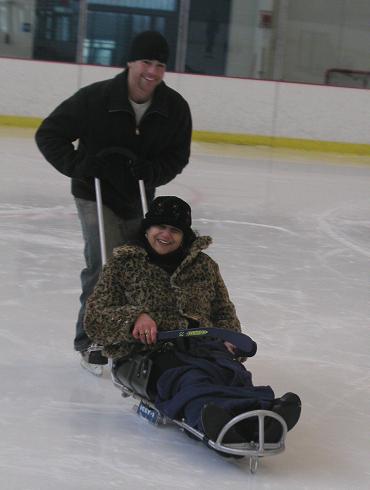
Seated ice skates offer a greater opportunity for skaters of all abilities to have fun on the ice. Not just for people who use wheelchairs, ice sleds give ambulatory people with balance,  fatigue, and other issues the ability to switch skating modes and explore new ways to move and play.

DCR's Universal Access Program has been providing ice sleds at state rinks for about 15 years. Ice sleds built by Unique Inventions of Peterborough, Ontario have met our standard for program use and provided hours of fun for users of all abilities indoors and out.


Wednesday, February 27, 2013

Kids and Kites on Ice!

Ice skating is a perennial favorite among winter activities that is growing in popularity as an adaptive recreation opportunity in Massachusetts state-owned rinks. Many rinks now house a couple of ice sleds for people with mobility impairments to use during public skating. The Massachusetts Department of Conservation and Recreation (DCR) also offers adaptive ice skating programs, in which the entire ice is reserved for use by people with disabilities and their families and friends. Over the years this has become a popular "come-as-you-are" program, with skaters using wheelchairs, walkers, ice sleds and regular ice skates to enjoy time on the ice. Over and over we find that being on ice inspires play!

We offer a variety of game elements at DCR Universal Access skating programs when we have full use of the rink. Balls of all sizes and pucks can be knocked into nets. Foam blocks are built into crash towers and re-stacked again. Orange cones are placed in slalom patterns. Often there are impromptu hockey games. It is amazing to see how skating skills improve when a game is involved! The skater's attention goes outward, beyond the sense of awkwardness and inability, to focus on a ball or puck, enabling them to improve sometimes without realizing it.

A recent inspiration for our adaptive skating programs is the addition of kites, which add a whole new sense of color and movement. We've been experimenting with kites on ice as a program element and it is a lot of fun for skaters of all ages!

This activity is best with plenty of open space on the ice. Outdoors it won't work if trees are close by, otherwise the sky's the limit! At our indoor programs it works best when attendance is on the low side, and of course, the ceiling requires careful flying technique.

Our typical kite flight involves someone skating backwards with a kite, which generates enough breeze to give lift to lightweight kites. A good skater can avoid mishap while keeping the kite at an appropriate height by setting a string length with one hand holding the line winder and using the other hand to pull in or release a small amount of line as needed. Power wheelchair users can lift kites easily if they have reasonable traction, but may not be able to view the kite in the air themselves. Such flights serve as a colorful element for others to enjoy, both on and off the ice.

We found out last week that kids on skates can handle small kites pretty easily. They seem to appreciate the novelty of trying two different activities together. I noticed kids improving their agility and speed, learning to look backward and forward and monitor their movement in space.

Kids in sleds being pushed can expand their sense of space by watching kites, following them, and having a kite flown with them. I have found it quite easy to control the height and flight pattern of longer kites as well as simple ones, to avoid skaters and give selected participants a closer encounter.

So far we've had no kite flying collisions, entanglements, cut string or kites caught on the ceiling. Kite flights last just a few minutes usually. The visual display of a kite in flight seems to inspire the level of attention necessary for sighted people to avoid them. Precautions should be taken if anyone on the ice has a visual impairment.

If you are looking for some uplifting color in late winter and have access to ice, try flying kites!

Friday, November 30, 2012

Being on Ice Inspires Play!

With winter comes ice, something many people avoid for its potential hazards, yet in the right context, ice brings out a sense of fun and playfulness. Where an ice rink is defined, indoors or out, any sort of game or play activity is bound to be going on. Being on ice propels the body into movement to stay warm.  Testing the slickness of ice translates into sliding, spinning, gliding, chasing and smiles. Ice inspires play!

I've loved the playfulness of being on ice all my life. I grew up in a neighborhood where a baseball field was flooded every winter by the local boy scout troop. The kids, teens and adults attracted to this local patch of frozen water became an impromptu winter community where play ruled. For many years an adult I often sought out frozen bodies of water to play games with my dogs. Now, as an adaptive recreation professional I observe and join people's delight on ice every winter in our programs. I love the way disability seems to evaporate when people with and without disabilities use ice sleds to play hockey.

Spontaneity and inventiveness abound in our adaptive skating programs. There seems to be a new game created at almost every program we facilitate. Some of the games we've generated include spinning donuts in power wheelchairs, ice sled races, hockey games with balls and pucks of all sizes and styles, flying kites while skating, lining up in ice sled trains, building foam block towers and walls to crash into, slaloms, and power chair towing of people in ice sleds in a variation of crack-the-whip. With skaters on conventional skates, using skate walkers, ice sleds and/or their own wheelchairs, and others using ice grippers over their shoes, the possibilities are still being discovered!

 If you are feeling hum drum about winter or need a therapeutic dose of fun and games, consider getting out on the ice wherever you are! If you live in Massachusetts we have a few programs coming up in the next ten days, with more scheduled for January through March.

December 2 - Holyoke
December 6 - Worcester
December 11 - Revere

Call 413-545-5758 to register for these programs sponsored by DCR's Universal Access Program! The whole rink is ours to play on for two hours! Come as you are (with warm clothes, gloves and a hat) and embrace winter with a spin on the ice!

Do you play on the ice? Please share your game inventions using the comment link below!

Friday, November 9, 2012

Accessible Public Skating At Massachusetts State Rinks!

The Massachusetts Department of Conservation and Recreation (DCR) has officially announced the start of public ice skating November 23 at 42 rinks around the Commonwealth. DCR's Universal Access Program maintains adaptive ice skating equipment at 20 of these rinks.

Towns with state rinks that feature adaptive ice skating sleds are Auburn, Boston, Brighton, Brockton, Cambridge, Franklin, Greenfield, Holyoke, Hyde Park, Jamaica Plain, Medford, Newburyport, North Adams, Plymouth, Revere, Somerville, Springfield, Taunton and West Roxbury.

Ice sleds offer a seated option for skaters who cannot use their legs or who have balance issues too difficult for conventional skating. Those who can use their upper bodies evenly can use two shortened hockey sticks with a figure skating pick on the opposite ends of the blades for self propulsion. A stroller bar handle can be inserted into the back of the ice sled to push sled skaters who cannot self propel or steer. Anti-tippers prevent people from tipping over backwards and an adjustable leg tray allows kids and adults to use most sleds. This equipment offers more inclusion of people with disabilities into the rink experience. Whole families can skate together!

Click here for a reference list of where ice sleds are located in the Massachusetts State rink network. Most rinks have two sleds, two sets of sticks, and one stroller handle. Some rinks (Brockton, Holyoke, Revere, Springfield, West Roxbury, Worcester) have more sleds and handles, and some rinks (Cambridge, Hyde Park) only have kid-sized sleds. (Kids fit well into adult-sized sleds but not usually the other way around!) Call the rinks directly (using phone numbers listed on the link above) or DCR's Universal Access Program at 413-545-5758 for more specific information.

For a full list of DCR skating rinks with public skating hours and directions, click here.

Thursday, February 16, 2012

Winter Fun Indoors and Out!


Program Increases Access at State Rinks from Chris Lovett on Vimeo.

We are still snowless in most of Massachusetts, but our skating programs at indoor rinks are still going strong! This week 65 people joined us in Brockton and 50 joined us on the ice in Revere. The Neighborhood Network News (Channel 9 Boston) showed up to do a film feature of our program! The reporter and cameraman stay on the ice for well over an hour and got some great footage of the heartwarming happenings that occur during a typical adative skating program. Check out both the NNN feature above and the youtube version below set to music!


Join the fun! Here's a list of the rest of our skating programs for this season!

Holyoke: Sundays February 26, March 18 and April 1:  12-2pm

Worcester: Thursdays March 1 and 29 from 2-4pm

Revere: Tuesdays March 20 and April 10 from 11:30am  - 1:30pm

Call Heidi Marie-Peterson at 413-577-3840 to register for the above programs.

Brockton: Sunday, February 26 from 1:30-3:320pm during public skating.

North Boston: Tuesday, February 28 from 1:30-3:30 during public skating.

Call All Out Adventures at 413-527-8980 to register for these last 2 programs!

You can still play outdoors on the snow at the Weston Ski Track outside Boston where snow is made overnight (thank goodness the temperature is dipping below freezing!). We have three more programs coming up:

Monday, February 20
Sunday, February 26
Sunday, March 4

Each Weston program runs 12 noon to 4pm. Call Stavros Outdoor Access to find out more and pre-register at 413-259-0009.

Saturday, January 28, 2012

Adaptive Ice Skating Techniques

Winter is wimping out on us so far this season. Thank goodness we can always resort to ice skating indoors! Ice skating provides an amazingly fun way for everyone to play, despite any fears of cold or falling. With more attention on this activity, we are embellishing our techniques for supporting skaters with disabilities on the ice. Here are our favored methods:

Assistive Skaters
One or more skilled ice skaters can easily assist a new skater with or without props. All Out Adventures shares some of their techniques on this video, which also shows skating on an ice sled.


Skatewalker
This is a home-made item using PVC pipe, glue and sometimes even screws. It is meant to serve as a balance aid, not to support full weight all of the time. We like to see people wear helmets when using these and work towards independent use if possible. If you make your own skatewalker, we highly recommend 1" pipe. We find 1 1/4" to be less strong and more likely to break. Can be made at varying heights. Users should grip midway along the upper side sections to ensure stability.

Gait or Transfer Belt
This standard item is a great aid for stand skaters, especially anyone for whom falling is not recommended due to fragility or a previous injury. The transfer belt has handles all the way around, allowing quick assistance when needed without invading personal space. Multiple skaters can more easily support a skater to stay more upright.

Portable Folding Ramps and Carpet
One or two three foot ramps are incredibly helpful for wheelchair access to the ice. They can be screwed into the threshold for stability. We like to add a short length of carpet coming out from under the ramp to provide a stable transitional spot for anyone who needs it. The end of the carpet can be "glued down" with some water, which quickly freezes it to the ice. This set up allows people using power chairs especially to get enough traction to come back off the ice.

Ice Grippers
This is of course not technically skating. In some of our programs we invite people on the ice "as they are" from power chair users to non-skaters, creating a near totally inclusive environment. Where rinks allow street shoes, those who truly wish to avoid skates can - using slip-on Yak Trax or other ice gripping devices - while tending to family members or clients, and enjoying the play experience on the ice. The use of ice grippers provides vital support to people assisting individuals using ventilators who have other especially sensitive needs.


Look closely to see the anti-tippers on each sled.

Ice Sled anti-tippers
We get our ice sleds from Unique Inventions in Ontario, a small company that supplies sled hockey equipment. They will custom fabricate sleds to order. We set our blades wide apart for extra stability and add anti-tippers to the backs of the blades under the seat, to prevent sled users from tipping over backwards by accident. Its a piece of aluminum rod that extends back from the blade above the ice and acts as a brace.


Ice Sled seat add-on
A jacket serves as a cover for
a personal seating device strapped
to the ice sled.
Some wheelchair users can transfer their seating devices right onto the sled. This works especially well for kids who need their usual or custom seating support. A few extra straps can help secure such items to the sled. Pieces of foam can be taped on or simply inserted under the legs as shown to provide additional support and protection from the cold beneath. We also have extra "chest straps" available to provide additional torso support for those who may need it on sleds with higher seat backs.

Ice Sled outrigger prototype
We are in the process of developing an added piece to act as an outrigger to prevent tipping sideways. Although falling down is an expected part of ice skating, some sled skaters really need to not tip over.

Ice Sled grip sticks
For those who have difficulty with grip and can move their arms, we staple or bolt adjustable straps to the sled sticks. These allow the palm of the hand to be more secure against the stick and the heel of the hand a place to push down for self propulsion.

Wednesday, February 16, 2011

Urban Skating Outdoors!


Bay Cove Day Habilitation joined us on the ice for a variety
of spontaneous games.
Tuesday was ccccccccoooold and winddddddddy but we squeaked in an outdoor skating session at the Kelly Rink in Jamaica Plain with a few playful souls. What is it about the cold? I admit I was reluctant to get out of bed this morning, yet once on the ice in that crazy wind, I wasn't the only one who warmed up quickly! Smiles abounded as everyone became energized in play. There is an added spirit of adventure in braving the elements and finding you can be comfortable and enjoy yourself. Of course, hot cocoa helps too!


Tuesday, January 11, 2011

Skating Ahead of the Storm Again - This Time in Boston

Big snow on the way tomorrow, but today the sun shone and the roads were dry for my monthly trip to Revere for our adaptive skating program. Lots of people came to play at the rink today and the Boston Herald sent a photographer! Another great program with smiling faces on the ice - people on skates, wheelchairs, ice sleds and yak trax - and socializing (hot cocoa!) in the lobby when anyone needed to warm up.

Ice action included slalom, shooting goals with pucks and balls, and the ever popular crash tower made of foam blocks. A few new spontaneous ways to play catch emerged - a rolling by hand version and a kicking version (very gently with skates on!). New and returning participants included people in power wheelchairs, a group of people with brain injuries, a trio of spanish speaking sisters, and of course our favorite man in bear paw mittens below.

Sunday, December 26, 2010

Skating Ahead of the Storm

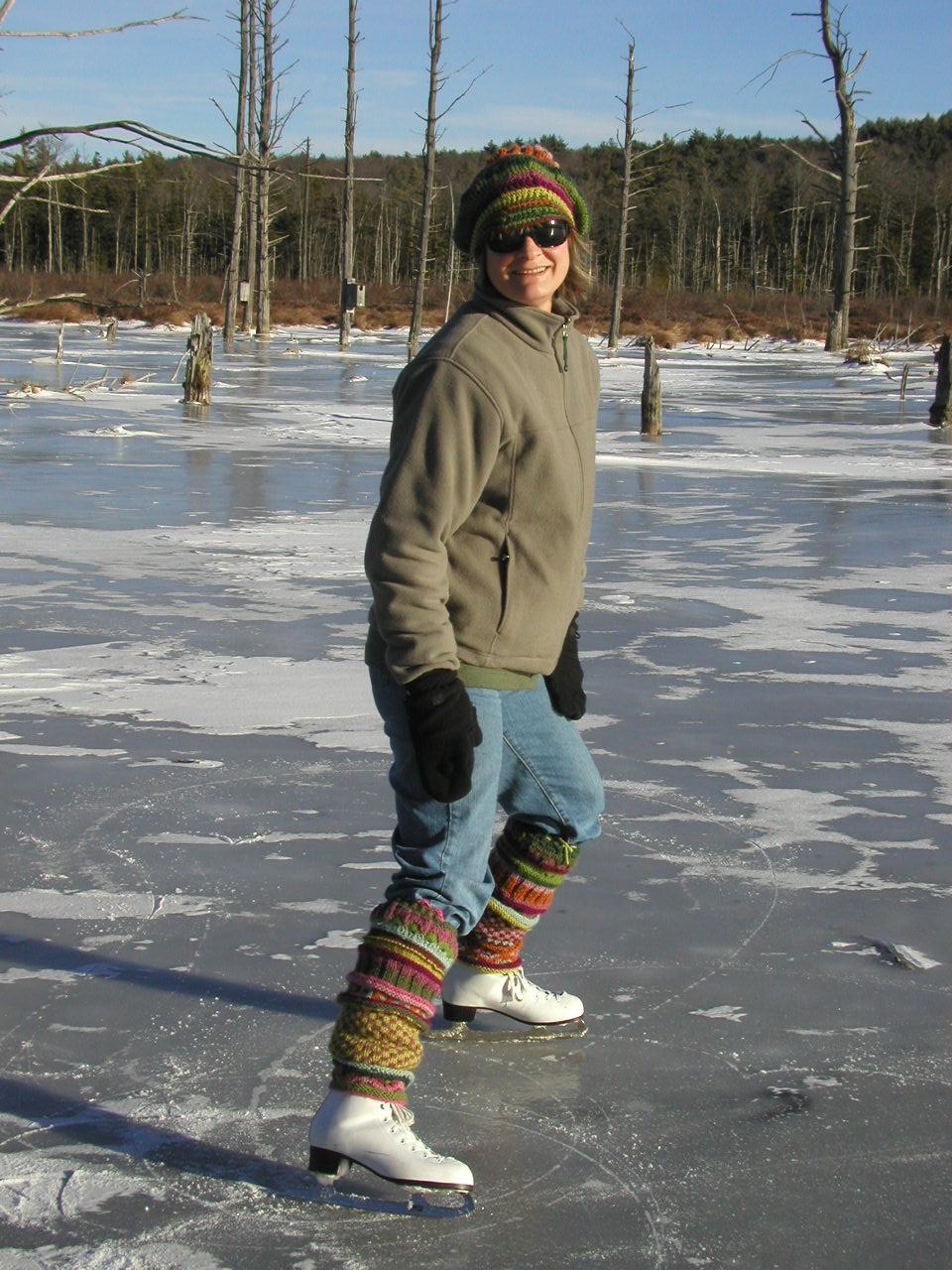
During the height of holiday craziness, sometimes it takes a friend to remind you that nature is not very far away. With no snow on the ground, access to local ponds was a real possibility after a couple of weeks of uninterrupted freezing temperatures, but I hadn't been thinking about it. On Christmas eve, with the sun shining in a blue sky, a friend mentioned she was going skating. I've only been skating in rinks of late, setting up ramps to allow wheelchair access, dispensing ice sleds and walkers from a launch zone at the doorway, with minimal time to actually zoom around myself during program hours. Now at last, was a chance to take a glide on the wild side.

Wednesday, February 24, 2010

Power Chairs on Ice - second round of a new contact sport


A growing group of power wheelchair users met at the Cronin Rink in Revere, Massachusetts, yesterday to play another round of a new game yet to be named. Is it power ball, power play, ice ball, ice soccer, or something else? Vote on your favorite name to the right!


Whatever its name-to-be, the game was played this time with two teams of four, crossways on the rink. Four players might be more cumbersome on a shorter ice field than three per team, but both sizes work. Thirty minutes seems like about the most time in which people can play together before cold sets in and a break is necessary.


We had four new players, Jeanette, Justin, Joe, and Brian, joining our returning enthusiasts Barry, Richard, Nick, and Tom. Jeanette became the first woman (who uses a power chair in daily life) to play and I noticed she gave the loudest whoops when a goal was scored. Everyone really enjoyed themselves. Brian, who came with others from Spaulding Rehab Hospital to try the game, said simply "I had a blast!" It seems to us that there aren't enough opportunities for people in power wheelchairs to engage together in play.


We are still playing as-is, without any protective devices, in a careful exchange that often involves contact on either side of the fitness ball, which cushions nicely and pushes chairs apart. However gently we play, there is still jostling between players seeking control of the ball. Broken reflectors and a broken fender in our first two games of play cause us to feel it prudent to invest in power soccer guards.
Though to the outside viewer, play may appear slow, much is happening between players who close in on the ball and have to work their way out of a scrum. Someone has to give or push, or use humorous persuasion perhaps, to free the ball back into play. Breakaways happen occasionally and goals are mostly left untended. Although the game has no formal rules yet, a few ideas are emerging for improvement.


You can read about the first round of Power Chairs on Ice here. Eventually this game may break out of doors. In the meantime we will continue on a monthly basis in Revere. To get involved, contact Tom McCarthy, Director of DCR's Universal Access Program, at 413-545-5758 or thomas.j.mccarthy@state.ma.us, or myself at 413-545-5758 or marcy.marchello@state.ma.us


Please share your experiences and ideas with regard to this new game here in the comments box by clicking on the underlined amount of "comments" below.

Monday, January 25, 2010

Power Chairs on Ice - A new game emerges

Power chairs on ice made a second developmental debut in Revere today at the Cronin Rink. A small group of power chair users gathered to test their wheels on the ice and play a game of....power ball? Could it be that this was the first time such a game took place on ice using a fitness ball? Who knows?


By way of warmup, we practiced some maneuvers with a seven cone slalom down the center of the rink, then some 2 lap races around the line of cones. Socializing, spinning and gliding intermingled with these more serious endeavors. I warmed up my fingers trying to make the stopwatch work, but competitive timed events fell by the wayside once we noticed that six people in powerchairs could create two teams of three.


While public skating went on at the rink's circumference, the interior was defined with long bolsters and two nets. After some consideration, it was determined that a coin toss was the best way to start the game. Once started, the game took on a life of its own and everyone soon forgot about time.


For Nick, only 5 1/2 months into life in a power chair, this was the best day he'd experienced since his injury. Barry and John, both using sip-and-puff technology to propel their chairs, were able to enjoy the game at the same pace as those using toggle switches, though they didn't always have as much control. Tom, ever a fan of sliding on the ice in his power chair, found the game interaction especially fun. It was Richard's first time on ice, and with a mid-wheel drive chair with a lot of pep, he had great control of the ball and was the first one to score a goal. John, the rink manager, relished the chance to use an extra power chair brought by Tom.


As I skated around taking photos, I observed the game to be like a slow motion form of power soccer. People were naturally sensitive about their chairs, especially without any protection, such as the guards around the front of the chair that are used in power soccer.


The fitness ball met the needs of the players well. When they lightly collided with it between them, it absorbed the impact and gently pushed them apart. The ball took some abuse and held up without incident. Occasionally a group of four would sandwich the ball, making for interesting interaction to see who would move so the ball would come free. The ball moved smoothly on the ice but didn't travel far when pushed, so it was easy to keep up with and carry forward. The ice added that random tricky element, as people sometimes got caught with spinning wheels in a slick spot. Otherwise, thanks to John's careful zamboni work before we played, traction was mostly good with the different chair models, especially in the slower speeds.


Power chairs on ice will take place again on Tuesday, February 23 at the Cronin Rink at 850 Revere Beach Parkway. For further information, contact Tom at thomas.j.mccarthy@state.ma.us or 413-545-5353.